
Tuesday was primary election day in Kansas, Michigan, Missouri, Virginia and Washington states. The most watched and probably the most important was in Michigan choosing the Democratic nominee for US Senate.
Rep. Haley Stevens (D-MI) faced off against Abdul El-Sayed, who has a medical degree from Columbia and D.Phil. from Oxford. El-Sayed lost a primary against the sitting governor in the last election and has been hosting a public health podcast.
On the surface, this contest would seem terribly boring. One candidate is a traditional politician; the other is a technocrat. These have been the two sides of the Democratic Party: the machine politician vs. the Progressive elite. But this isn’t quite right. Stevens was an official in the Obama Whitehouse, so she’s pretty technocratic.
What this primary elections represents is the struggle within the Democratic Party between the establishment and the insurgent Democratic Socialists of America.
The Establishment Democrats
The Republican party held the Whitehouse for three straight terms between 1980 and 1992. The Democratic response was the Democratic Leadership Council (DLC), a body organized to develop positions that would appeal to voters and recruit candidates that could win elections. Its most famous product was Bill Clinton, the first Democrat to be elected to a second term since FDR.
The DLC pushed for center-of-the-road policies and candidates that were not clearly ethnic. It was no accident that the Arkansas governor and his Tennessee running mate (Sen. Al Gore) won two terms. But what about the policies?
DLC policies were so electorally successful that they became the establishment position until very recently. These included being very positive about the free market, a strong dollar, booming stock market, and support for Israel. The DLC was also proudly American. One famous moment was Bill Clinton’s “Sister Souljah Moment.”
Sister Souljah was a rap singer who claimed, among other things, that blacks can’t be racist against whites. Clinton denounced this position and lauded the racial progress made in the country during his first campaign. The effect was to stop the Democrats from taking up radical positions like Souljah’s and establish Clinton firmly near the center of American politics.
The Democratic Socialists of America
The Democratic Socialists of America (DSA) was founded by Michael Harrington in 1982 out of two previous groups that started in the early seventies. It pushed economic policies that were well to the left of mainstream Democrats and very much to the left of the DLC. Harrington, it should be noted, was adamant about keeping out anyone associated with Communism. (This was during Reagan’s confrontation with Russia during the Cold War, don’t forget.)
The DSA was not much of anything during the ascendancy of the DLC. It wasn’t much during the Obama administration, either. But all this changed in the last two years, starting in New York City.
I’ve written before about Mamdani, the mayor of NYC. He is the most prominent member of the DSA and also represents a Red-Green alliance that has been much more powerful in Europe than here. Red stands for far left, even Communist politics while Green is the color of Islam. Mamdani rode this wave to victory in NYC, and El-Sayed has done the same in the primary in Michigan.
The Red-Green alliance is very much a part of the DSA and is also a direct rebuke to the DLC. It promotes ethnic politics and ethnically identifiable candidates. It rejects free markets and moderate taxation. And most especially it is very much opposed to Israel and holds the Jewish state responsible for the attacks of October 7, 2023.
DSA candidates also exhibit all the racial politics and anti-Americanism that the DLC tried to suppress. The leading candidate for the Democratic nomination for governor of Wisconsin, Francesca Hong, has said repeatedly that she would like to cancel Thanksgiving, of all things. The DSA promotes the idea that America and all “white culture” is inherently racist.
Now, El-Sayed is not officially a member of the DSA, but he promotes policies indistinguishable from them. For instance, one of El-Sayed’s most used words in his campaign was “AIPAC,” which is short for the American Israel Public Affairs Committee. It is very clear that these references are aimed at the idea of “Jewish influence.” One of El-Sayed’s most prominent supporters is a man who said America deserved what happened on 9-11. He has done nothing so far to distance himself from these comments.
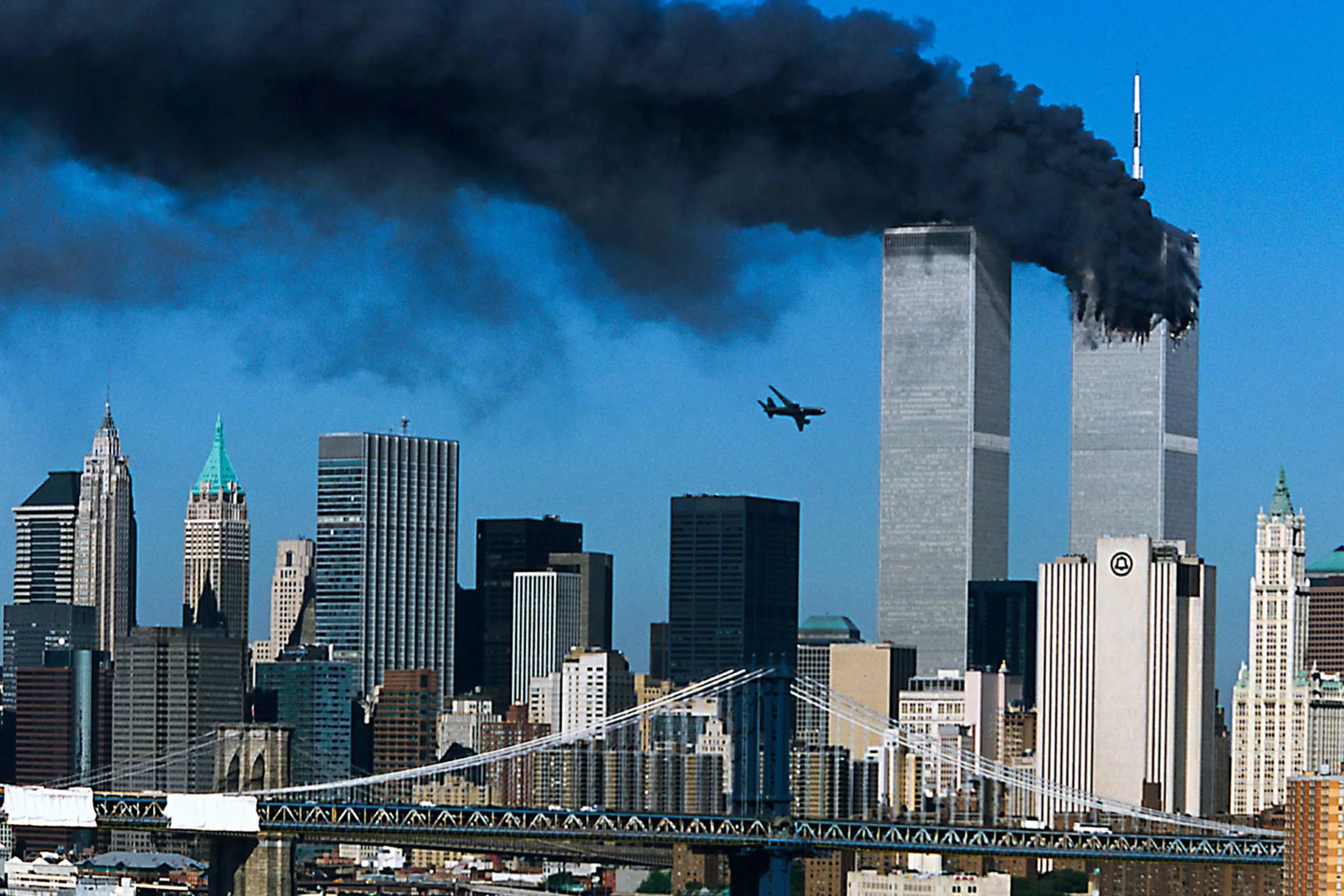
El-Sayed has taken the fight right to the Democratic establishment, complaining more about them than the Republicans or Trump. He even suggested putting Sen. Fetterman’s (D-PA) head on a pike for his position on Israel. There is a fight within the party, and El-Sayed’s primary victory is a significant win for one side.
The Stakes
The stakes here are significant because the US Senate is in the balance. The Democrats are throwing everything they have in the attempt to win the Senate, but this nomination might get in the way. The retiring senator from Michigan is a Democrat. If El-Sayed loses the election, not impossible in a state that Trump won in the last election, the possibility of winning a majority is almost impossible. Almost immediately, therefore, the establishment Democrats have registered their support for El-Sayed.
The Red-Green alliance is not only a rebuke to the Democratic establishment and the DLC, it is not compatible with major parts of the Democratic coalition. Obviously, Jewish Americans would have a hard time supporting these candidates. 75% voted against Mamdani in the mayoral election. What will they do in other elections when the party seems to be happy with El-Sayed?
Mamdani is instructive for the black vote, too. He didn’t get much support from them in New York. El-Sayed might have the same problem. Black voters are not fans of the Red-Green alliance. And so with the Jewish vote, might they hold back from supporting Democrats in other races? Black citizens register very high levels of patriotism. Are they going to vote for a party in which major candidates think 9-11 was deserved and that Thanksgiving should be cancelled?
El-Sayed’s Republican opponent is Mike Rogers, who served in Congress from 2000 to 2014 after a career in the military and the FBI. A more striking alternative to El-Sayed would be hard to imagine, and Rogers is already making that clear. He wrote on Facebook, “I spent years hunting terrorists and bringing Osama bin Laden to justice. Never in a million years did I think that I would be running against someone who believes America deserved 9/11.”
This will be a race to watch.