
Canada and the United States are currently in a trade dispute. For many Canadians it is a war. Most Americans don’t know it is happening. The difference lies in the fact that a huge amount of Canada’s economy depends on trade with the United States, averaging over recent years at around 75%. The US figure is more like 13%. That’s a big difference.
The United States and Canada have been trading back and forth since before they were even countries. That came to a screeching stop just last week. So, let’s recap the last few decades.
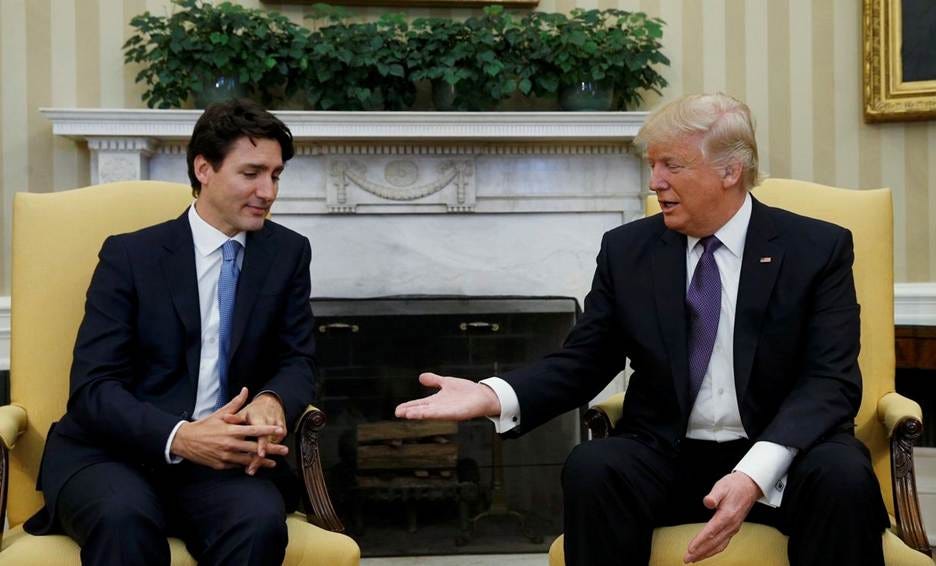
The first major movement towards free trade between the US and Canada also included Mexico in the 1992 North American Free Trade Agreement (NAFTA). This was renegotiated at the end of Donald Trump’s first term as the United States-Mexico-Canada Agreement (2020).
When he returned to office in 2025, he declared “Liberation Day” on April 2, imposing tariffs on countries all over the world, including Canada. That’s why trade negotiations had been going on for months between the US and Canada and the US and Mexico. But everything fell apart with Canada on August 21. The US imposed 50% tariffs on almost all Canadian goods. Canada did the same in retaliation. That means the each government charges 50% duty on anything coming into the country from the other, grinding to a halt a lot of the cross-border trade. That’s where we are now.
Trade Dispute
There are some areas where the US imports a lot from Canada. Around 60% of US oil imports come from Canada, as well as an astounding 100% of its natural gas imports. But that sounds like a lot more than it is. The US imports very little oil and gas. Overall, it exports more than it imports, so we are really talking about only 20%. And one reason for even that is to keep the refineries at peak efficiency.
The auto industry is very integrated between the two countries, especially in SW Ontario. This has been a longstanding and productive partnership. Recently, however, Canadian environmental regulations have begun to differ so much from American ones that there is strain on the partnership.
In all of this it is important to remember that Canada is a very small country, by population, sitting next to the largest economy in the world. And 70-80% of all Canadians live within 100 miles of that giant. That is the context for all of this.
What Is at Issue for Canada?
With such a huge part of its economy dependent on US trade, a dispute like this is almost existential for Canada. The country can’t suddenly start sending its goods elsewhere around the world, so collapsing trade with the US means a stop to most of the economy.
Canada’s biggest economic problem is also its biggest economic asset: it is close to the US. Take a major export item, lumber. 60% of the lumber Canada exports goes to the US. The other 40% largely goes to Japan and China, so from the West Coast across the Pacific.
Canada has a highly sophisticated and developed lumber industry. And people in that industry get reasonably well paid. That makes Canadian lumber economically viable to purchase in the US. The US has a lot of trees, but not the same logging industry. It would cost too much to start it up or expand it.
But that’s not true everywhere else. Europe has forests. Sending wood from Canada to Europe would make the wood too expensive. And they can’t sell it to Africa or South America. Both continents have their own lumber industries and very much lower standards of living, making Canadian lumber way too expensive to sell anywhere other than the States.
This is true for just about every Canadian product. A quick trip across the border (remember that 80% of Canadians live near the US) does not add much to the cost of anything, certainly not as much as shipping to another continent. So Canadian products are a decent price in the US. That the Canadian dollar is less than the American only adds to this cost advantage.
So, Canada needs access to the American market. But it also needs to protect its own market. Everything it produces has to be somehow less expensive than making it in the US.
Again, think of lumber. The US could supply its own lumber needs indefinitely if it were to expand out its logging industry, much as it has done with oil and gas. It doesn’t only because buying lumber from Canada is more efficient. But if tariffs or an extended trade war drive up the price of Canadian lumber, it would make sense to expand American logging and permanently displace the Canadian suppliers. This would kill the Canadian logging industry. It only really has one market.
What’s the US position?
There are about 150,000 automotive jobs in Ontario. Any American president would like to say he moved 150,000 high paying, union jobs to some part of the US. That alone is an attractive prospect, especially with a tough midterm election coming up that seems set to be decided by what voters think of Trump’s handling of the economy. Don’t think that hasn’t occurred to anyone in Washington.
The other issue is, as always, China. The US is concerned about two things China has been doing: passthrough manufacturing and dumping.
Passthrough manufacturing describes the process by which a Chinese company makes a product and then sends it to Canada for final assembly. Think of an Ikea flat pack where the Canadian factory just assembles the pieces with the little key. But the Canadian company can say it was “made in Canada” and it can enter the US market under the USMCA terms.
Dumping is a policy of sending materials to another country at less than they cost to make, with the intention of displacing that other country’s ability to make that stuff. China did this with solar panels. Chinese solar panels flooded the market in the early 2000s, dropping the price by 80% and putting most American solar panel companies out of business.
Let’s go back to lumber. Canada provides a lot of lumber to the US, as we’ve discussed. But the US produces 5-6 times more plywood than Canada does. If China wanted to undermine the US plywood industry, it would ship plywood to Canada below the cost of American plywood. Guess what? They did just that. Three days after negotiations broke down between the US and Canada, the Canada Border Services Agency accused China of dumping plywood onto the Canadian market.
There are other issues with China. For instance, in 2021 a Chinese organization bussed Chinese students to a party nomination convention to sway the votes to a preferred candidate. CSIS, the Canadian spy agency, confirmed that the Canadian Member of Parliament, Michael Chong, was being threatened by Chinese agents, as were his family members in Hong Kong.
There are also their cars. China has been accused of dumping electric vehicles onto foreign markets to both displace local manufacturers and to take advantage of what these cars can do. Modern cars, but especially electric ones, can record everything around them all the time and send that information back to the manufacturer. And people plug their phones into them! It is quite literally a foreign enemy’s dream product.
The US has strict regulations against Chinese cars, with a law banning all vehicles with “connected software” from China or Russia. Canada is now letting them in, dropping the 100% tariff they had on these vehicles to 6.5% this fall. Will the US stop every Chinese made car at the border? How would that work for a family that wants to visit relatives?
A Tale of Two T’s
While both countries have legitimate issues at stake, too much of the recent contretemps revolve around the personalities involved, especially Donald Trump and Justin Trudeau.
Everyone knows Trump. He is preternaturally disposed toward saying things that will put half the country in a fetal position. And considering that the median voter in Canada is to the left of Americans with Trump Derangement Syndrome, it is no surprise that he sets them off.
For Trump’s first term and briefly upon his return to the White House, Canada was governed by Justin Trudeau who seemed to have been cooked up in a lab to annoy Trump. From his bubbly liberalism to his, shall we say, “mysterious” Cuban flair, Trudeau seriously got under Trump’s skin.
But when Trump suggested that Canada would be better off as the 51st state, he got the kind of rise he loves. Canadians took the bait and Trump tugged on that line. He even referred to the Prime Minister as “Governor” Trudeau. Canada went nuts.
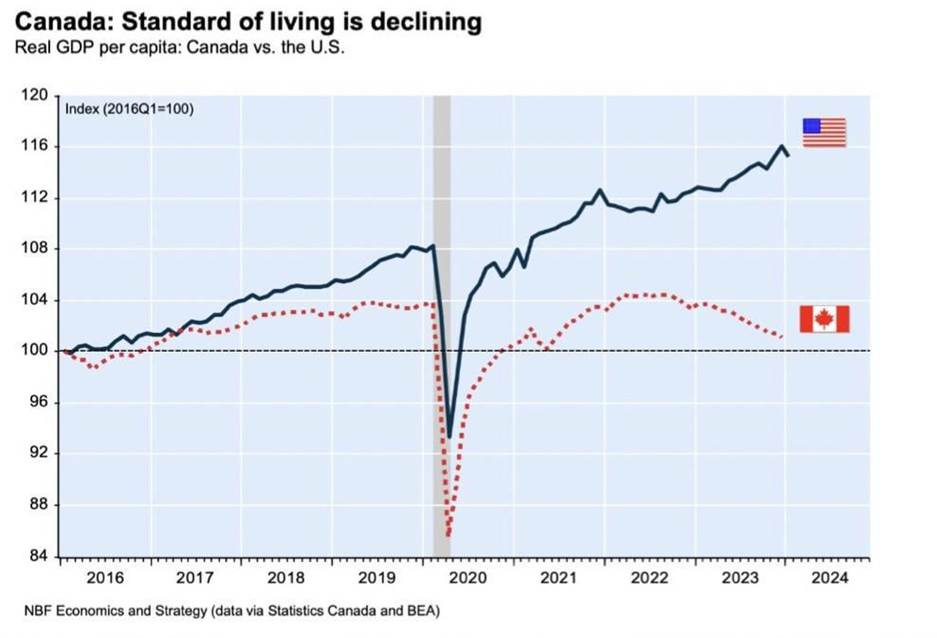
There was a Canadian election in March of 2025 where the Conservative party seemed ready to make significant gains, if not win. Economically, Canada has not been doing well for the past ten years. For the first decade and a half of the 21st century, the Canadian economy was keeping up with the American. After 2015 (the year Trudeau was elected and replaced Stephen Harper’s Conservative government), the divergence became undeniable.
But Trump’s comments about Canada did a lot to swing the election to Trudeau’s replacement, Mark Carney, another lab-grown irritant to Trump. Before renouncing his Irish and British citizenships when he became prime minister, Carney was the perfect example of a Globalist elite: having made his money in finance in several countries, he became the head of the national banks of two countries (Canada and England), headed up a global financial board, and, in his last job before becoming PM, was UN Special Envoy for Climate Action and Finance. You can’t make this up.
Carney’s slogan during his campaign was “elbows up!”, a reference to a practice in hockey that usually draws a penalty. But it worked. He won the election. But he entered office in a most adversarial relationship to the country his economy depends upon.

Canadians are talking again about “elbows up!” Some are suggesting they stop the flow of oil from Alberta. The problem with this plan is that Canada ships very little oil or gas through its own country. To keep itself “green” it puts them in pipelines to the US for most of the journey, then sneaks these vital products back into the country at the last minute. Ontario and Quebec, the two provinces with all the power in the country (also home of the “Laurentian Elite”), would freeze if the oil stopped.
Others have suggested shutting down the Saint Lawrence Seaway. That will show the Americans! Alas, the same problem. Not only does Canada rely on shipping through the St. Lawrence river more than the US does, some of the locks necessary for transportation are on the American side.
Lessons?
The first is that not everything is economics. Economic rationality would have Canada submit to any and all indignities to preserve its market share. It won’t. It is a sovereign country, even though I could go on at length detailing the ways it has undermined that sovereignty. (Don’t get me started on the sorry state of the military.)

Canada still has the political and cultural resources to be a unique and sovereign country, even living beside the United States. One excellent example can be found among the writers at Without Diminishment:

But the other lesson is that people matter. Too many think that impersonal forces move the world. They don’t. The way individuals respond to them does. There’s no way the current disagreements would be happening with a Kamala Harris presidency (shudder).
Moreover, we are currently in a meme war, or a one-sided meme war. Mark Carney has said he won’t negotiate until the US stops making nasty memes about him. That, of course, is the worst possible thing he could have said, and only he could have said it.
This is all very personal for me. I will be naturalized as an American citizen today, September 2, perhaps before you read this post. Of course my two countries would get into a trade war the very week this happens!
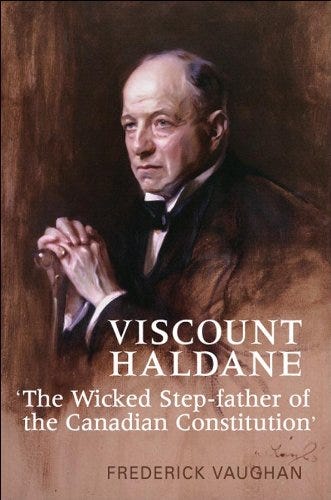
I loved growing up in Canada and I have a great respect for its distinct culture, especially its political culture. My father spent his adult life thinking and writing about that culture. He was often critical of it, and the country would be in a better place if it had heeded his warnings. But he also had a deep respect and admiration for the American Constitution, which he always held up as one of the greatest achievements of human history.
Maybe this trade war will get Canada back on track, get it to see its predicament with clear eyes, and understand not what makes it weak, but what makes it strong. Canada could be better because of all of this. And so, in homage to my father, I hope that someday someone will write a book that will describe Donald J. Trump as the wicked stepfather of Canadian nationalism.
Thank you for writing this!