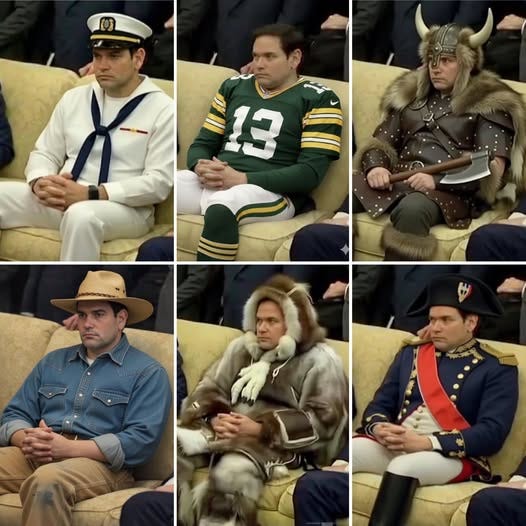
Last week an article in the Free Press reported that a meeting between Trump Administration officials and Vatican officials was so tense that the Americans threatened the prelates with memories of the Avignon Papacy.
As you will recall, the term “Avignon Papacy” refers to the period of 1309-77 during which seven popes established their court in France rather than Rome. It was the result in part of French influence over the papacy, legitimate fear of the German emperors invading Rome, and the very involved politics of the period. (Just to give a taste, the Crusades were still going on, the Hundred Years War between France and England was beginning, and Dante was writing his Divine Comedy.) St. Catherine of Sienna was influential in personally convincing the pope to return to Rome.

Probably unfairly to the seven popes, the period was also characterized as the “Babylonian Captivity” and it was assumed that the popes were the puppets of the French kings. That didn’t really happen until after the popes returned to Rome and “pretender popes” were elected in Avignon. And this doesn’t even give you a hint of how complicated it all was.
Anyway, the reference was certainly intended to suggest that the Church could be controlled by the most powerful government on the planet. Wow! And given that the Renaissance started during this period, it could be a good time for artists. (Pres. Trump’s heavy-on-the-gold renovations of the Oval Office are now looking really on point.)
Well, it didn’t happen. The Avignon Papacy did happen, but the Vatican confirmed that there was no such heated conversation and certainly no threat about moving the Pope to Florida. (Although his brother does live there and is a big supporter of the President. So don’t count it out.)
Everything smoothed over and cooler heads prevailed.
BUT NO!
You guessed it, Pres. Trump took to Truth Social.
Rather than go through it all on my own, I’ll leave it to two of my friends who are much more qualified to deal with the details.

and

In short, Pope Leo expressed his (not surprising) position that the war in Iran is wrong and that diplomacy and discussion should have continued. Responding with the presence of mind and self-control of a honey badger that had been dropped into a nest of fire ants, Donald Trump took to Truth Social and has doubled-down in subsequent statements to the press. (The Pope’s side has also been out with an interview on 60 Minutes with three, shall we say, controversial Cardinals. And Pres. Clinton’s political advisor met with the Pope just before all this began.)
Trump’s lack of equanimity surprised everyone, everyone, that is, who has been living under a rock for the past ten years. At this point had he responded in a statesmanlike manner the world would have stopped on its axis.
Statesmanship
From the moment he descended the golden escalator to declare his intention to run for office, The Donald’s seeming indifference to the words he uses has caused nothing but confusion. Is he really that crazy? Half the country says he is, and the other half says he isn’t. (The rest of the world, by the way, is certain that he is.) He seems intent on driving people mad.
To make the contrast more clear between his words and his deeds, let’s sum up a number of events that, in hindsight, start to make sense:
In April 2025, the Trump administration formed a security agreement with Panama after threatening to take it over by force. This effectively removed Chinese influence from this important waterway, an influence that was growing quickly.
On January 3, 2026 American forces captured the Venezuelan (not recognized by most countries) president and his wife to face trial in New York. The surviving government is now working very closely with the US. This after China was getting oil from Venezuela at below market prices because the country was sanctioned and could not sell on the open market. Venezuela is estimated to have the largest oil reserves in the entire world. China was able to buy this oil in its own currency and not US dollars.
Subsequent pressure and blockade of Cuba has led to negotiations and the release of several thousand political prisoners by the Communists.
The February 28 attack on Iran and now blockade of its ports has shut down oil exports from the Gulf, which China relies on. China was also able to buy this oil at below market rates and in its own currency rather than in US dollars.
Both the operations in Venezuela and Iran have shown the hollowness of Chinese defense systems, resulting in the demotion, disappearance, and death of many top military officials and defense engineers in China. This significantly reduces the potential of an attack on Taiwan.
An agreement between the US and Indonesia was announced this week (although signed in February, interestingly) that strengthens trade and military ties between the two countries.
Here’s a map that might start to make sense of the moves above:
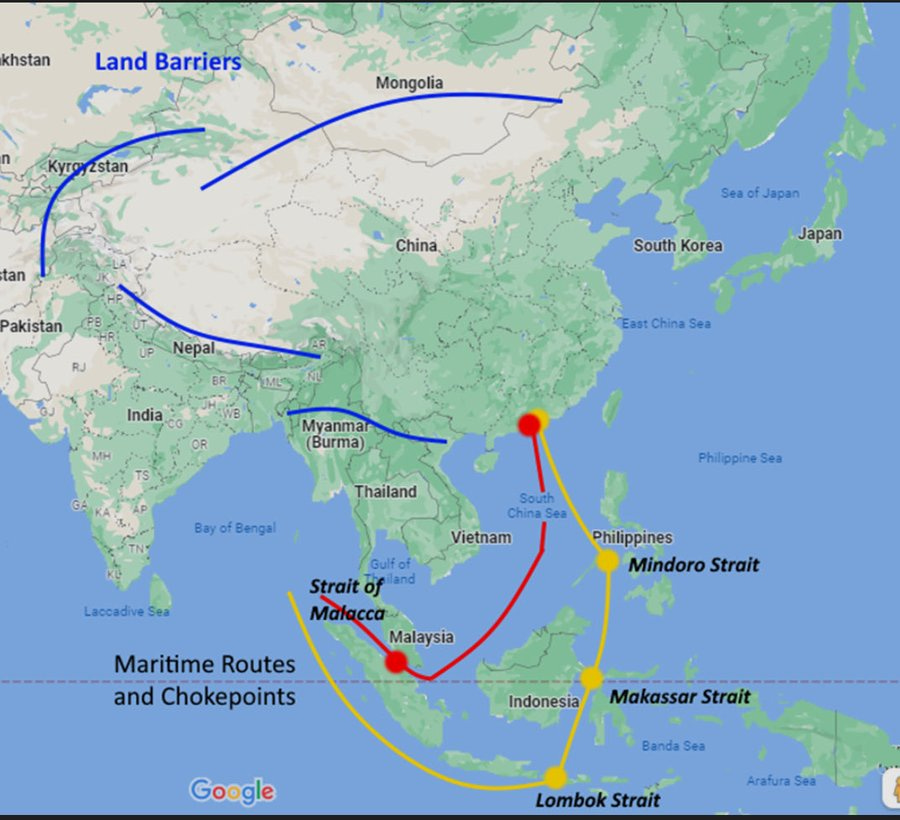
The Trump administration has secured for itself or rendered impassible almost all the major trading chokepoints in the world (Panama, Hormuz, Malacca, Mindoro, Makassar, and Lombok), and certainly the most important ones for China. It has undone the efforts at “de-dolarization” of the oil markets, securing the US dollar as the sole means for trading the most important commodity in the world. (There are some significant economic advantages to this that I won’t get into.)
I could just be reading into these events, but they do seem intentional. They do seem coordinated. But I’ll agree that they don’t seem compatible with posting AI generated memes of oneself as Jesus and then saying, no, I just thought it was a picture of me as a doctor working for the Red Cross. (No, really. This happened.)
Trump at Canossa?
In 1077, the Holy Roman Emperor Henry IV knelt in the snow at the castle of Canossa in northern Italy, begging for pardon from Pope Gregory VII. Their dispute was over who was allowed to appoint bishops. (A secret agreement with China—yes, them again—was made under Pope Francis regarding this very issue.) Gregory had excommunicated Henry, which brought him to repent.
Again, only those living under a rock could imagine Donald Trump asking forgiveness from anyone. By all measures he should, however. His words were intemperate and unbefitting a man of his position. But it won’t happen.
Perhaps this is another job for Marco Rubio.