
We are now three weeks into this war that is not a war. Because the Senate has not declared war we cannot, technically, call it a war. The other reason is that the other side is hardly able to fight back. It is one of the most one-sided military campaigns in history, reminding some people of the Battle of Agincourt and Henry’s lines from Shakespeare:
But in plain shock and even play of battle,
Was ever known so great and little loss
On one part and on th’ other? (Henry V, IV.8 113-15)
But this is not over and terrible things can still happen.
What We Know
As I’ve already said, the military campaign is very lopsided. Iran seems to be running our of missiles while American and Israeli planes and drones can do whatever they want.
The tactic of decapitation, that is to say, killing the entire Iranian leadership in targeted strikes, is unprecedented. Usually, the top political and military ranks are not in direct danger. This is reflected in the concluding lesson of John McCutcheon’s song about the Christmas Truce in WWI, “Christmas in the Trenches”: “That the ones who call the shots won’t be among the dead and lame/ And on each end of the rifle we’re the same.”
Pres. Trump has even pointed out one of the ironies of this policy, namely, that there is no one left to negotiate with. Each time someone is appointed to a leadership role, he dies in an Israeli attack. What does this mean? We really don’t know because we haven’t seen anything like this in military history. [This point probably shouldn’t be in the “What We Know” section, obviously.]
A Wall Street Journal piece this week revealed another feature of Israeli penetration into the Iranian regime. The paper reproduced a transcript from a telephone call where Mossad (the Israeli military intelligence agency) called the personal cell phone of a mid to low level Iranian soldier and spoke to him in Farsi. Apparently, they have the numbers (literally and figuratively) of almost everyone in the country. They are also getting targeting information from Iranian civilians. This is also unprecedented.
That’s the good news. There’s also bad news about what we now know.
Iran fired two missiles at the American base on Diego Garcia in the Indian Ocean. Remember this island? It is part of the Chagos Islands that Prime Minister Starmer of the United Kingdom was going to pay Mauritius to take off his hands. Everything is connected!
The thing about the missiles targeting Diego Garcia (one of which crashed into the ocean on its own and the other destroyed by the US Navy) is that Iran wasn’t supposed to have missiles that could reach a target that is 2,631 miles from Tehran. Everyone thought that they didn’t have the capacity for that.
A missile that can go that far is known as an Intermediate Range Ballistic Missile (IRBM). If it can reach Diego Garcia, it could reach Berlin (2,200 miles or 3,540KM away), Paris (2,610 miles or 4,200KM) and almost London (2,750 miles or 4,400KM). And Tehran isn’t the closest part of Iran to Europe. European countries do not have anti missile systems that can protect them from IRBMs which can reach descent speeds of up to Mach 10 (that’s ten times the speed of sound!).
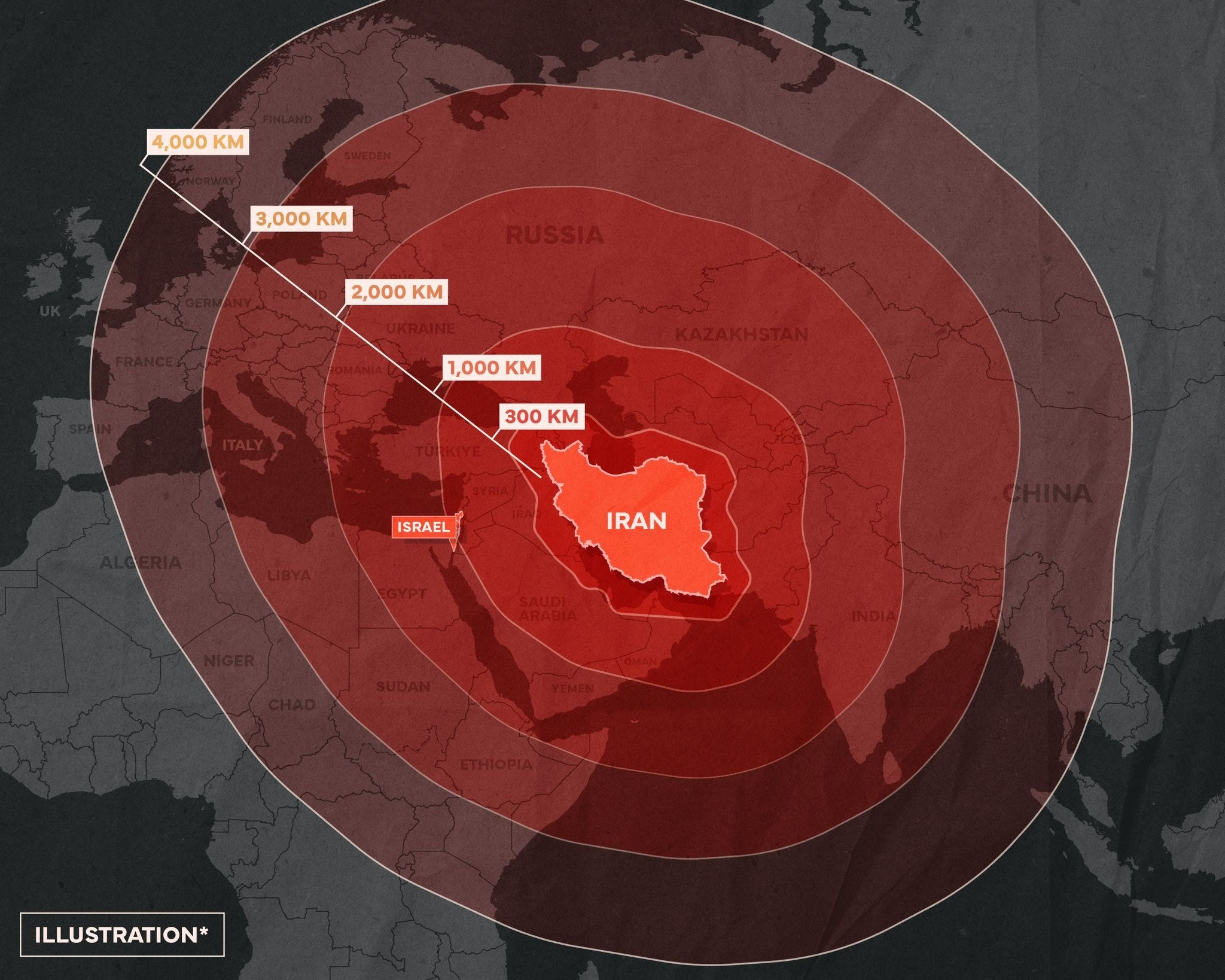
Knowing that Iran has missiles of this capacity puts the decision to attack them three weeks ago in a new light, but doesn’t resolve the issue. Some might say that it justifies the operation because they were certainly trying to develop missiles that could threaten Europe. Others might say the operation is even more reckless because they have those capabilities already and might, therefore, have other things we thought they didn’t have, such as nuclear weapons.
New light tends to make opposing interpretations only more clear to the beholder. It comes down to how one feels about being held hostage by apocalyptic fanatics with a death wish, by which I mean the Islamic Republic not, in this case, European environmentalists.
What We Don’t Know
The big unknown is when the Strait of Hormuz will open to tanker traffic and get the oil flowing. A lot depends on this, and not just the price we pay to fill our cars.
The Americas are pretty shielded from the blockage of Hormuz, at least directly. Canada, Venezuela and the US have more oil than they use and other byproducts, such as fertilizer, are sourced from within the hemisphere, too. (California, however, does get gas from across the Pacific because shipping it from the Middle East is somehow more environmentally friendly than producing it locally, which they could and did do.)
Europe and Asia are in trouble, but what can they do? Japan, for instance, has no sources of oil within its territory. This lack of oil was, I’m afraid to point out, one of the reasons it expanded into its “Co-prosperity Zone” prior to WWII. Not really days of blessed memory. Japan and South Korea apparently have several months of reserved oil, but others like India certainly do not.
Most European countries have shut down their domestic supplies of oil and gas for environmental reasons. Much like California, they’d prefer to ship it half way around the world and through some very tricky bottlenecks than pull it out of the ground beneath their feet. (What was I saying about fanatics?) A closed Strait of Hormuz makes them even more dependent on Russian sources. And this is especially true for fertilizer, which they will need very soon as planting season begins.
Oil isn’t just for cars, although that’s were we see most of it. Somehow it is also involved in the production of helium, which is used in the making of computer chips. Don’t ask me how. And the Middle East provided most of Taiwan’s helium. Taiwan is where most of the chips are made for the whole world.
Other News
The Department of Homeland Security remains unfunded. Some airports are seeing five hour waiting times to get through security because TSA officers are not showing up to work if they aren’t getting paid.
Two solutions have been suggested (apart from the obvious one of enough Democrats voting to release the funds). First, Elon Musk has offered to pay the employees, himself. While he has he money, he couldn’t actually do this. He could give as much to the Treasury as he wants, but Congress would still have to pass a bill or continuing resolution to allow DHS to draw money to pay its employees.
The other suggestion, which Pres. Trump seems likely to do, is help staff TSA with ICE officers, who are getting paid. Whether or not that solves the problem, it might be enough to get the Democrats to concede and do what is necessary to fund the rest of DHS. The question is how the part of the party that is fanatically opposed to deporting illegals will respond to this suggestion. Is funding DHS worse than ICE agents in airports?
In other news, the Trump Administration has submitted its petition in the birthright citizenship case. Their argument is that “under the jurisdiction” does not apply to aliens, whether legal or illegal.
Remember that this all hinges on an interpretation of one clause in the 14th Amendment. So there is a lot of work going on to build arguments around how “under the jurisdiction” would have been understood at the time of passing the 14th Amendment. But because no one really wrote down what they thought it meant, probably because they assumed everyone understood, we are trying to trace the history of the concept.
As if the news is conspiring to let me tie everything back to Henry V, one of the arguments used in this case goes all the way back to the Salic Law.

You will remember that Henry’s claim to the throne of France rested on the Salic Law’s understanding of who is eligible to inherit sovereignty. Well, in a republic, citizens inherit sovereignty. So we have a well-developed history on this very issue. Of course, the fact that the last time we had to turn to the Salic Law was the middle of the Hundred Years War isn’t a great source of comfort.