
As anyone of a certain age will know, this is known as Star Wars Day. That’s all I’ve got on the issue.
Strait of Hormuz
Deja vu all over again. Some ships are getting through. Some aren’t. There are conflicting words and actions coming out of Iran, so it’s unclear who might be running things there. Iran even suggested they have trained dolphins ready to engage in suicide bombing raids. OK.
Oil and natural gas stockpiles continue to decline in Europe and Asia. Without their own sources, self-inflicted on the part of Europe, things are only going to get worse there. Some countries in Asia are cancelling internal flights, closing schools and universities early, and imposing curfews because they cannot light their streets at night. Australia is said to have only 30 days of jet fuel left in the country. Without it, they will be cut off from the rest of the world
Midterm Elections
Because the US is energy independent, the effects of blockages in the Strait of Hormuz are largely muted. We might be seeing gas well above $4/gallon, but we won’t have to impose any of the measures being contemplated in other countries. So the real point of pressure is the election in November. Will Pres. Trump try to find a way to get out of the Hormuz problem before people start voting in just a few months?
To recall, all seats in the House of Representatives will be up for election and about one third of Senate seats. The House is significant because if Democrats gain control they will almost certainly spend the remaining two years of Trump’s presidency impeaching him and every member of his administration. The Senate is the place where an impeachment trial would take place, but the swings there are less dramatic.
Economic problems continue to pull down Pres. Trump’s approval ratings and the chances of the Republicans retaining the House. They might even lose the Senate. But never underestimate the ability of political parties to sabotage themselves. The Democrats as a party are polling below even Pres. Trump. And they are not hitting the high notes with some of their nominees.
In Maine, the longstanding Republican senator is Susan Collins. She is generally on the furthest left end of the Republican spectrum. She has been a thorn in Pres. Trump’s side for years. But as a Republican in a rather liberal state, she is vulnerable. The Democrats, however, have seen fit to push forward on their side an avowed Communist with a Nazi tattoo, Graham Platner. He has the very same image that is at the center of the Mitchell and Webb skit, “Are we the baddies?”
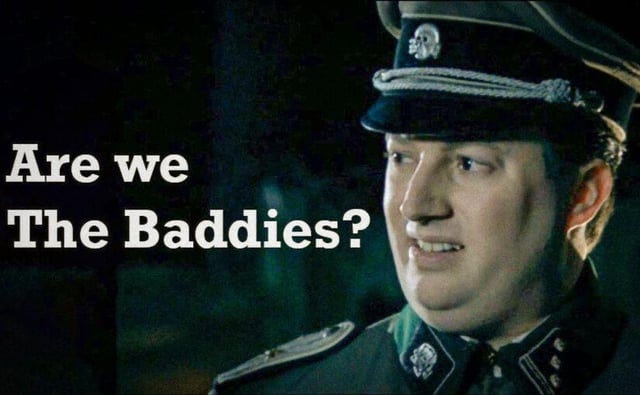
The popular and un-tattooed current governor of Maine challenged Platner but could not get traction. So this is the man Collins gets to run against.
Meanwhile, in Michigan, Abdul El-Sayed is tied in the Democratic nomination race for senate. He is a very open supporter of Palestinian causes and anti Israel. At a time of war in the Middle East and active antisemitism in the Democratic party, this could be a real risky move.
Redistricting
Both parties are trying to squeeze out as many seats for themselves as they can in continued redistricting in a number of states. California, Texas, and Florida have all made changes to their maps to benefit the party currently in power.
Virginia passed a new map that added heavily Democratic parts of the DC suburbs to rural districts in an attempt to flip them. The most notorious is the “Lobster District.” Elbridge Gerry would be proud.
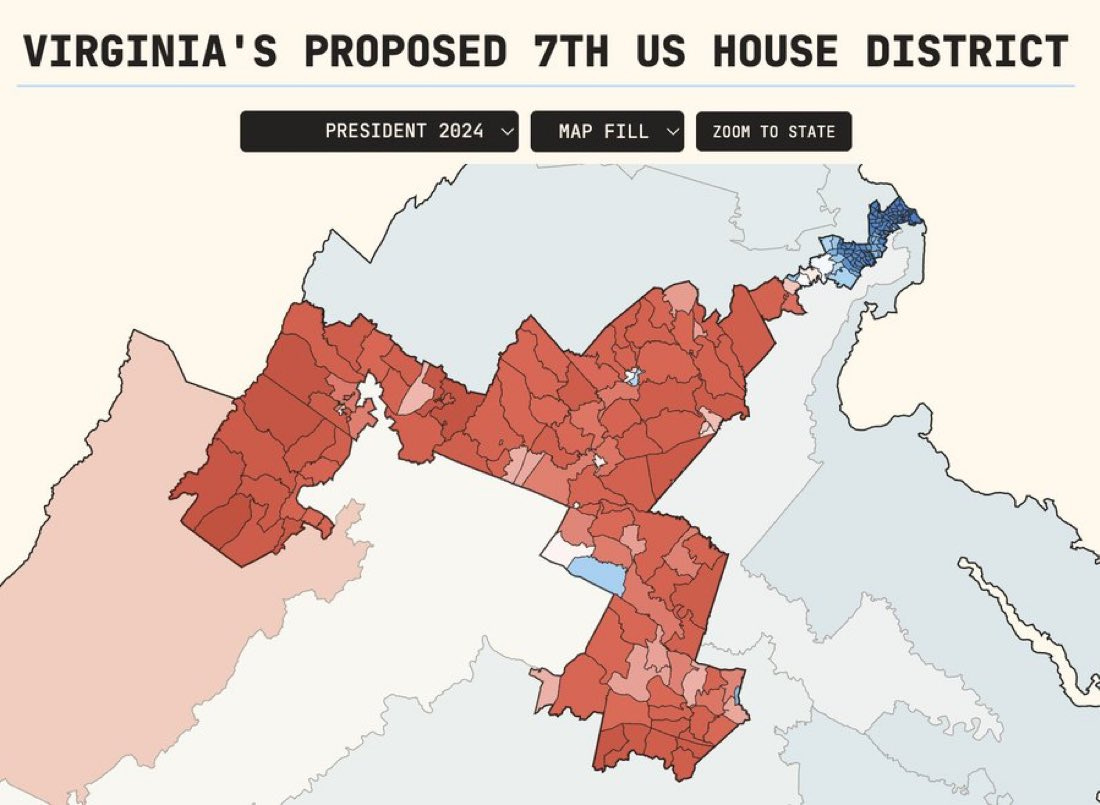
The new map is being challenged in court, so it might not go through. But if it does, it would take a state that currently has 6 Democrats and 5 Republicans in the US House to one with 10 Democrats and 1 Republican (assuming voting patterns remain constant).
Meanwhile, the Supreme Court ruled that district lines drawn with the intention of producing a particular racial makeup are unconstitutional. While the Voting Rights Act dates from 1965, the provisions about majority-minority districts (districts drawn so that the majority of the population is black, for the most part) was added in 1982.
Would eliminating these districts make much of a difference? That is disputed. Take, for instance, Tennessee’s 9th district. TN-9 is a heavily black district in Memphis, but it has elected a white man, Steve Cohen, every election since 2007. He is being challenged by a black man running on the Republican ticket. So is this about race or party? That’s important, because the Court says gerrymandering with racial intent is unconstitutional, but gerrymandering for political or partisan intent is not.
Rudy Giuliani
Rudy Giuliani, I hope, will go down in history as one of the greatest mayors of the greatest city in the country. He was mayor of New York City from 1994 to 2001, during a period of remarkable transformation. He is currently in hospital in Florida and looks likely to pass soon.
New York, along with many American cities, became ravaged by crime from the 1970s through the 1990s. Giuliani, who was a US Attorney and prosecutor before becoming mayor, took a tough on crime position. In effect, this meant arresting and prosecuting criminals rather than looking for “root causes” of crime. The transformation of New York was amazing.
He was also the mayor of the city during the World Trade Center terrorist attacks of 9/11. His strong leadership during this time earned him the title of “America’s Mayor,” and added to his reputation. He was talked about as a presidential candidate for a while. The current mayor of NYC could not be more different.
His subsequent history was not so kind to his reputation. He worked for and with Pres. Trump, then turned against him, then back again, and again. As with many who have tried to publicly spat with Trump, Giuliani suffered far more than his target, regardless of his personal merits. Sic transit gloria mundi. We can pray for him and thank him for what he did for New York.