
Tomorrow will mark one week into the joint operation between the United States and Israel. The US calls the operation “Epic Fury” and the Israelis call it “Roaring Lion.” But we can’t call it a “war” because the Senate has not declared war on Iran.
The House and Senate introduced bills earlier this week to order the President to remove all forces from unauthorized hostilities in Iran. (Notice they avoid the word “war.”) It failed in both houses along mostly party lines, 47-53 in the Senate and 212-219 in the House. Even if it had passed the President could have vetoed it and neither vote was anywhere near the 2/3 majority required to override a veto.
What this means is the use of military force in Iran is legally ambiguous. It could be authorized under the Authorized Use of Military Force act from 2001. It might be compliant with the War Powers Resolution of 1973 (passed by 2/3rd majority over Pres. Nixon’s veto, by the way). But now that both houses of Congress have refused to stop the military activity when given the chance to vote on the issue, there really isn’t much of a legal or Constitutional issue against it.
This isn’t really the way the Article I branch (the legislative) and the Article II branch (the executive) are supposed to operate, but we’ve been doing it this way for decades.
What’s Been Happening?
The good news is that the American military has been demonstrating an astounding level of proficiency, as has the Israeli. On the attack side, they have had amazing success taking out all defensive systems in Iran and degrading the offensive systems. They are also systematically eliminating the leadership of the Islamic Republic. On the defense side, the interceptors have shot down an astounding number of missiles and drones.
The bad news is that the Islamic Republic is even crazier than we thought. The whole reason for the war military operation was that the Iranian apocalyptic fanatics would not be restrained by the principles of self-preservation and rational calculation. They’ve proven that theory correct.
At last count, the Iranians have attacked 14 different countries with combinations of ballistic missiles and drones. They are attacking their erstwhile allies, such as Qatar, and all other Arab nations. Normally, these countries will at least publicly object to anything Israel does against any Muslim country. Now they are joining the US and Israel. Saudi Arabia may even use its air force to bomb Iran. One ballistic missile was shot down over Turkey. We don’t know if it went astray or was intentional, but technically it would draw all of NATO into the war because Turkey is a member. It is also on Iran’s border so a land invasion would be possible from there if Turkey got involved.
Not only is Iran alienating every surrounding country, it is not able to rely on allies further away. China has supplied Iran with a significant part of its military technology including, in the last thing I read, supersonic anti-ship missiles. Iran fired them off and not one of them hit their target. Oops. Now China has signaled that it will provide only “moral support” for Iran, but nothing more.
What Are Some of the Consequences?
We can’t say what is going to happen, but we can see what is happening. Here are some things we can say:
American Military: American military dominance is clear. Chinese and Russian weapons systems are no match for what the US has. They supplied Venezuela, too, and that didn’t work out well for them. Who will want to be their allies now?
Allied Militaries: Israel is at the top of its game. Don’t mess with Israel. We are also learning that Europe is hollow (except for France). The UK can barely set forth a few ships. The navy that once ruled the seas is stuck in port. Meanwhile, countries like the United Arab Emirates have larger and more sophisticated air forces than once world-leading forces like Canada. Power is shifting.
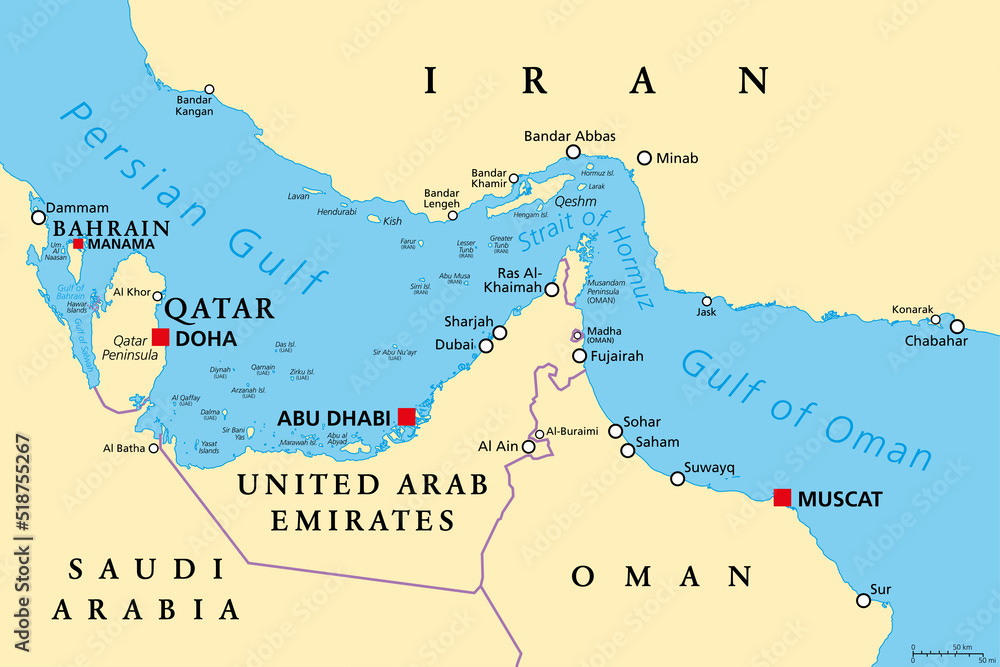
Economic Impact: Everyone is looking at the price of oil and natural gas. A huge amount of the oil and gas that comes out of the Middle East passes through the narrow Strait of Hormuz. Iran is trying to close that waterway; the US is trying to keep it open. (There are some fascinating but complicated things going on with maritime insurance, but I won’t get into that here.) With the war in Ukraine most of Europe has shifted its imports from Russia to the Middle East. Now that is being strangled. (Europe actually has lots of oil and gas in the ground. They just won’t extract it for political reasons.) But the longer this goes on the higher prices will go, and that’s not good for anyone’s economy.
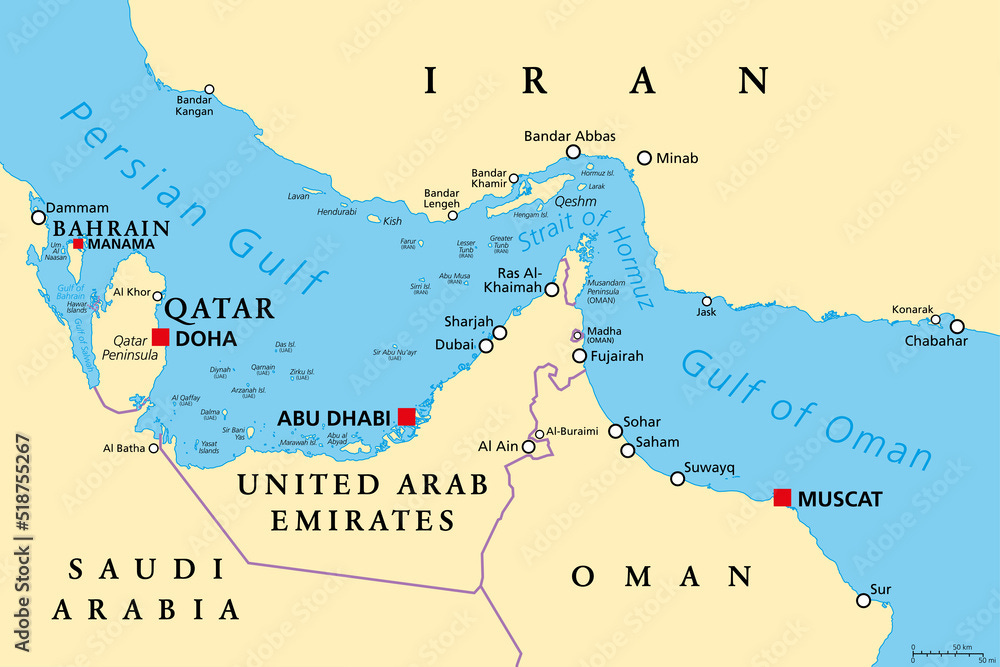
China: China is in a bind. It needs oil and gas and something like 80% of it comes from the Middle East and through the Strait of Hormuz. Their erstwhile ally is trying to strangle that passage. Hmm. Maybe that accounts for the lukewarm support. Reports are coming in that Chinese military planes are not currently harassing Taiwan, something they’ve been doing for years. Are they trying to save gas? Maybe. It does give us an indication of just how sensitive China is to interruptions in their energy supply.
What To Watch For
The sooner this comes to an end the better for everyone. No one is going to benefit from a long, protracted war operation. Human casualties are the first concern, of course. Then comes the infrastructure in the Middle East and economic consequences elsewhere.
The Strait of Hormuz will continue to be the main thing to watch. Currently it is closed because Lloyd’s of London will not insure any ships, not because Iran has physically closed the strait. The US has stepped in to act as an alternative insurance company. One theory is that the US cut out the UK’s intelligence community on the attack on Iran because Prime Minister Starmer could not be trusted. It has long been suspected that Lloyd’s got secret information from MI6 about foreign affairs which allowed them to maintain their place at the center of insurance. (OK, I couldn’t help talking about insurance.) If a US version replaces Lloyd’s the world insurance markets would change dramatically and the UK would lose a massive economic mainstay.
The midterm elections are coming soon and gas prices are rising. More Americans are going to vote according to their economic interests rather than a war halfway around the world. If the economy sours, look for a very bad result for Pres. Trump. A Democrat majority in the House will start impeachment proceedings immediately and a Democrat majority in the Senate would schedule a trail in the most painful way possible for the President. On the other hand, a quick victory would be something to celebrate in the same year as the 250 anniversary of the country. Oil and gas prices would drop, patriotism would be up, and Democratic complaints that Trump doesn’t know what he’s doing would land like a lead balloon. Not much middle ground between those two options.
The US is an oil and gas exporter now, which means we use less than we produce. And now that Venezuela is working with us rather than against us, its oil reserves (calculated to be the largest in the world) could help keep prices reasonable. The rest of the world is not so lucky. Europe is stuck with limited imports, but Japan has only something like 9 months of reserves, China has 4-5 months, and India apparently has only one month worth of oil and gas in the country. These countries are going to be desperate for anything that trickles out of the Gulf of Arabia or via some other route. Short supply and high demand will drive prices through the roof.