
“Doesn’t matter what I say / As long as I sing with inflection
Makes you feel that I convey / Some inner truth or vast reflection
But I’ve said nothing so far / And I can keep it up for as long as it takes
And it don’t matter who you are / If I’m doin’ my job it’s your resolve that breaks…”
—Blues Traveler “Hook”
Nathan Fielder’s film, You Can See Everything, is terrific and I would see it again. But I am trying to figure out why. Why does this very unusual film work as well as it does? Why is it universally acclaimed? How can a three hour documentary about an old business scandal appeal to everyone? That broad appeal is itself a little suspicious. It is not a deep dive into the Theranos “Case” where Elizabeth Holmes and her partner Ramesh (Sunny) Balwani defrauded investors, left patients with incorrect blood test results, and fooled America’s “best and brightest.” For the detailed rundown on the facts of that case, I recommend John Carreyrou’s book, Bad Blood, which leaves little doubt about the amount of deceit practiced in the halls of Theranos (and is fun read too). Fielder isn’t diving into the “whodunnit” or a courtroom drama. We are not reviewing depositions and court filings. For those of us interested in the “case” this film fails the promise of its title, “You Can See Everything,” as you see virtually nothing about it. And yet it is far more compelling than the (quite good and informative) 2019 documentary The Inventor: Out for Blood in Silicon Valley which largely follows the details of Carreyrou’s book through interviews with the principal players.
Fielder’s film captures our attention in a different way and reels us into this drama through simple conversations, uncomfortable silences, vignettes of daily life, extreme close ups, a compelling score, a production design that makes it hard to forget you are watching a documentary, as well as some unexpected “plot” twists. This is high craftsmanship on display, but that doesn’t fully account for why it is so compelling, and why after three hours I found myself (and I suspect many others in the audience) wanting the film to be even longer.
The genius of Fielder’s film is that he pulls us into a mystery from many directions. While promising that “you can see everything” the reality is more like “you can see anything,” not that you can believe whatever you want about Elizabeth Holmes, but that you can pull out of this story a variety of threads that are compelling. These are the hooks. In music, the “hook” is the catchy bit you can’t shake off. The melody that persists in your memory hours after the song has played. Blues Traveler famously detailed the power of “the hook” in their own hit quoted above. The hook seeps into and beyond our psyche, lodging itself somewhere between our spinal column and our medulla oblongata. The Blues Traveler track has a playful yet mournful harmonica hook that is hard to resist. Beyond that, the song is built on the foundation of Pachabel’s Canon in D, a chord progression so irresistible and so frequently requested that professional instrumentalists come to dread having to play it again. Blues Traveler’s “Hook” is built on one of music history’s greatest hooks. Beyond that, however, the song tells you what it is doing while it does it. The lyrics reveal how the hook is deployed and how it works, breaking the “fourth wall” of the song (if songs have the other three walls?) as you listen and even in that moment, the songs lets us know that “still my confession draws you near.” There is something similar going on in this film.
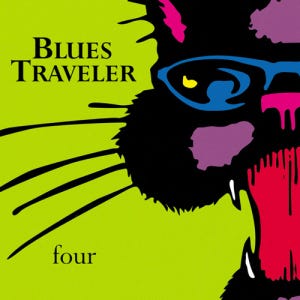
In “You Can See Everything,” Fielder drops many hooks that grab our emotional attachment, our interest, and tap into our imagination. If the Blues Traveler song drops a couple of hooks for us, You Can See Everything drops some kind of super-multi hook in the water, with lures to catch nine different kinds of fish. The first hook is the drama of an getting a close up view of an unusual situation, a woman facing here last few weeks before going to Federal prison. Beyond that, he gives us some elements of a crime story, a family story, a love story, a detective story, a love triangle, a philosophical think piece, an art film, and a reality TV show. And like the song “Hook", this movie is about the making of this movie. It is about itself as you watch it, so in addition to all those other things, this is a “making of” documentary about the documentary you are watching while you watch it.
I have seen a critique of this film that suggests it is a “show about nothing” and a exercise in nihilism. I disagree. It provides a compelling villain and characters to serve as a stand in for the audience, which help steer our opinions. The film brings no heavy handed judgment—this is no “message movie”—but it provides plenty of evidence to come to some conclusions about Holmes and her partners truthfulness. It also brings our attention to Fielder himself and asks us to think about him as the filmmaker and a character in the story. Fielder is frequently in the frame, headphones on, watching what is going on along with us, sometimes from a distance, hidden in shadows, other times he participates in intimate and tense conversations. We cannot forget that this is being produced, that this family is surrounded by cameras and sound guys. At one point Fielder is confronted about his motivations, and we must ask the same questions. This movie is about its subject, its filmmaker, and about how movies work.
In the end, this is a film that leaves the viewer with more questions than answers, and as a result it is unsatisfying as a documentary about the Theranos “case,” but it is compelling cinema. We can wonder in the end if Fielder is an artist with big ideas or just a craftsman looking to cash in on his skills.
If you aren’t interested or don’t want to risk three hours in a movie theater, I recommend you spin Blues Traveler’s meditation on art, insight, and audience appeal. It concludes with a burst of lyrics that come so fast and forceful so as to suggest they are the “real” voice of the artist breaking through, finally saying what he really wants to say, but, of course, we can’t know for sure. All we have is the song and we know it is an artifice. He told us so, and concludes with these lines:
“Hear what I say, I have a prayer to pray, that’s really all this was.
When I’m feeling stuck, and need a buck,
I don’t rely on luck, because . . . The Hook brings you back”