
When I converted to Catholicism, I took some comfort when I learned that believing in private revelation was not obligatory. Some of that stuff: Mary appearing here and there and sharing strange messages, secrets, and even artwork struck me as, well, kind of “out there” and difficult to believe. The good news was that I didn’t have to believe it to get in the door of the Catholic Church. Now with many more years under my belt as a Catholic, I have more open perspective on private revelation, appreciate their variety and mystery, and practice many devotions that are their fruits. As a result, I would have been part of the target audience for Alexis Carrel’s The Voyage to Lourdes. Carrel, an experienced medical doctor and practicing research scientist, presents his account of traveling with Pilgrims to Lourdes in 1903 with the expectation that he will be able to observe and explain away the healing that occurs there. He doesn’t doubt that some people are experiencing improvement in their conditions, but he doubts that they are healed by miracles. He rides in a train along with hundreds of pilgrims, many suffering sick, church officials, and other colorful characters, offering his medical assistance and making scientific observations along the way. He does not hide his perspective from his fellow travelers and engages in thoughtful conversations about what he thinks will actually happen for these pilgrims at Lourdes. He assists in their care, is respectful of their faith, and is totally confident in his understanding of what is going on until he must confront something that he cannot explain. This a powerful little book and great reminder that there is much about our world and our lives that we simply cannot explain. Here from the postscript:
Science, of course, must be continually on guard against charlatanism and credulousness. But it is also the duty of science not to reject things simply because they appear extraordinary or because science is powerless to explain them.
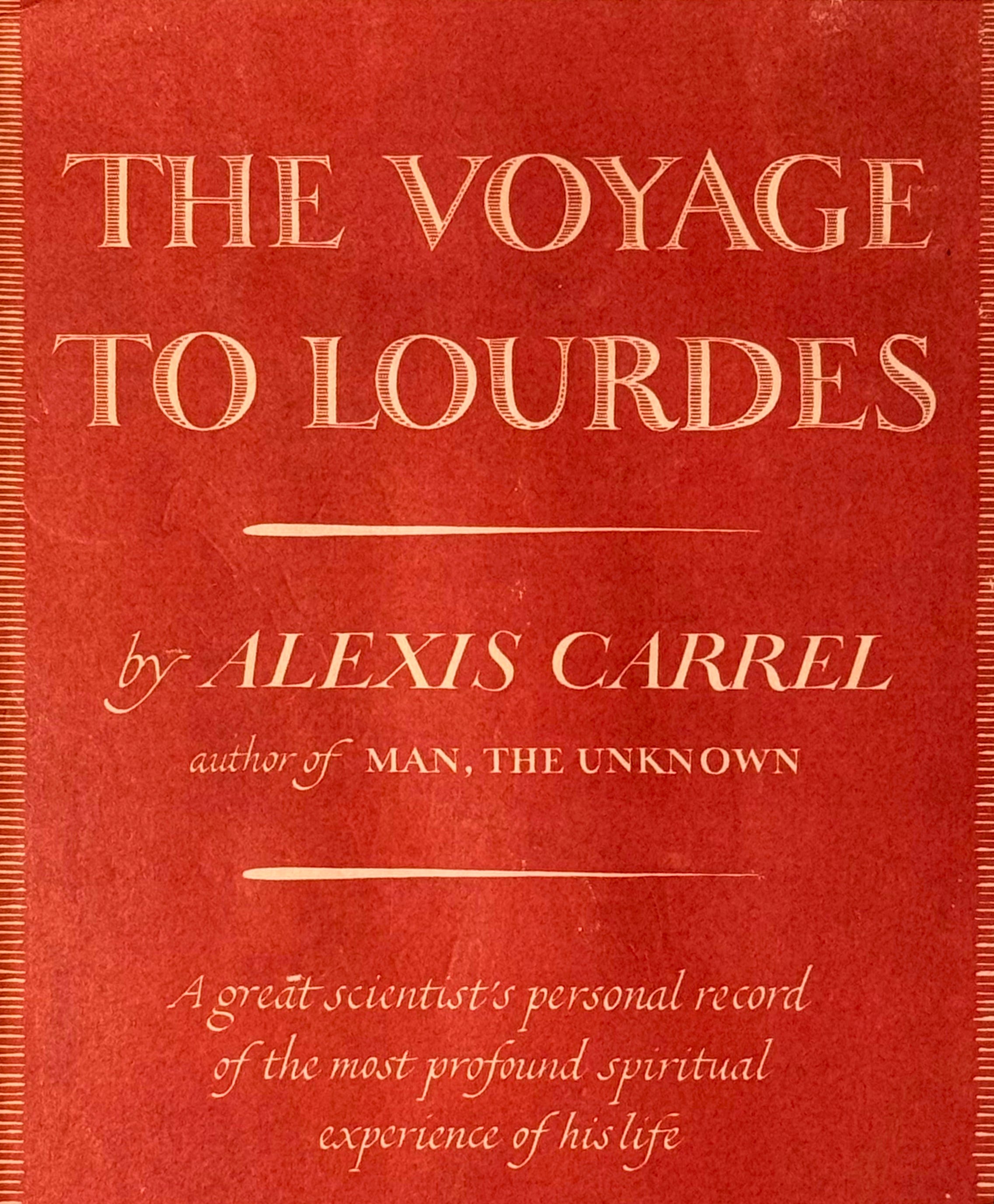
In addition to being an engaging book with a profound message, this volume has the added advantage of having little volume. It is a slim book, easily read in a single sitting or two. (Teaching guru, James Lang, recently posted about the joy of a short book over at his substack, and I agree: Sometimes it is worth getting the morale boost of knocking out a “whole book” quickly). The Voyage to Lourdes (Harper and Brothers, 1950) appears to be out of print. I stumbled across it at a used book store, so I assume there are more copies out there. Grab it if you find it.