
Americans elect all Representatives in the House and one third of Senators on even numbered years (and the President every four years) on the Tuesday after the first Monday in November. The Constitution did not set this date, so all this had to be worked out in the states and Congress. States did not initially hold elections on the same day. In fact, the presidential election was standardized only in 1845, and congressional elections were all moved to the same day as late as 1872.
Most other countries do not have a regular date for their elections. Having a set date means people can plan well ahead and know what the schedule is. Any country anywhere can have a last-minute event that changes the direction of the election. When it happens in the US, it will usually be in October. An October surprise is an event that happens just before an election, which in the US would be October.
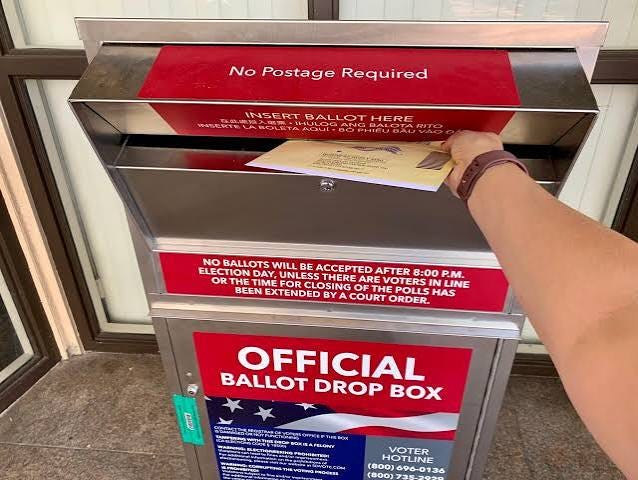
An October surprise can be a last-minute event that just happens, but in general it is meant to imply that it is something manufactured, that is, intended by one of the parties. It was originally used by the Ronald Reagan campaign to warn that the Jimmy Carter was planning a sudden deal with Iran to swing the election.
But an October surprise can also be something that just happens. The financial crisis in 2008 happened before October, but it derailed Sen. John McCain’s campaign and, whatever else might have happened, certainly helped Sen. Barak Obama win.
Let’s Catch up with France
I wrote previously about events in France. They are continuing, and in some places, they are getting much worse. The problem from here in the US is to get a sense of what is really happening. You have to think of this as different groups converging on the same events.
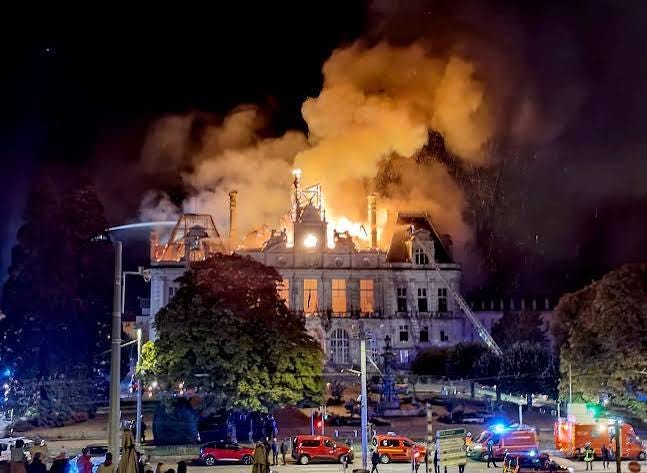
First, you have the teachers and students who initially started the protests. They have a lot of support among the general population on the left and their actions are generally within the norm for French protests. They are a bit extreme for us, but it’s France.
Second, you have the far-left parties that are trying to use this for political gain. They love protesting students. It gives them fantasies of 1968 when protesting students had a huge influence on the French Republic and fundamentally changed it. They will be the ones carrying the French flag or the Communist flag. Usually both.
Third, you have the “Black Block” or Antifa radicals. These are revolutionary anarchist groups well to the left of the legitimate parties. They have cells throughout Europe and the US. They kept Portland, OR under siege for over a year and show up at the tail end of protests to turn them violent. This is an international group definite political goals, namely, to cause so many problems that the political system grinds to a halt. You can identify them from their all-black clothing, masks (including gas masks) and goggles. They will usually show up in tactical gear.
Reuters has an excellent collection of photos from the riots.
Finally, there are the Muslim immigrants and children of immigrants. As mentioned before, there is a large population of unassimilated Muslims in France as there are in almost every nation in Europe. This isn’t every Muslim in the county, but there are a lot of them in the poor parts of every major city. During the summer, after big soccer games, and at New Years, they will often burn cars in their own neighborhoods, clash with police, and cause mayhem in confined areas. It’s just a thing. They usually show up to protest in flip-flops and t-shirts but are starting to dress like Antifa because it does help protect against facial recognition software. (But you will often see them take off their masks to celebrate destroying something.)
But these same are also part of a more widespread Islamic movement throughout the Western world. They are organized and have a clear agenda of taking over the countries they have moved into. There are currently demonstrations in Toronto supporting these riots and jihad. Italy has had to deploy troops to several cities to stop their own immigrants from rioting. Youthful exuberance meets civilizational war.
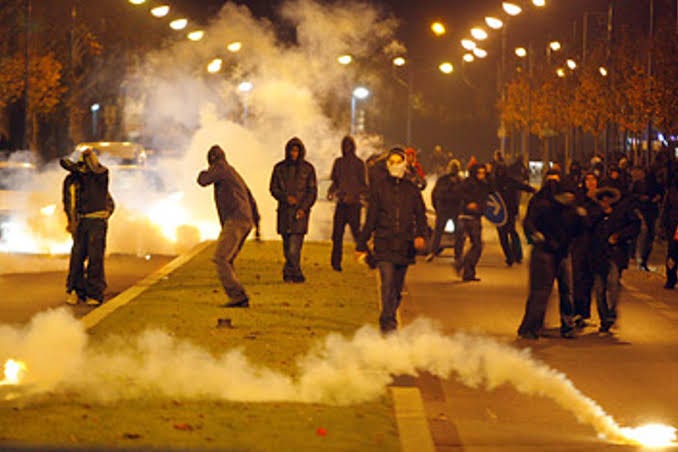
There were a lot of protests again this weekend in France. They tend to be started by the first group and organized by the second group. Many, many of them went off without a problem. But at some of them the second two groups showed up and that’s when things really turned ugly.
The Antifa anarchists are not the same as the Muslim youth going wild, but it can be hard to tell the difference. Antifa has adopted a lot of the symbolism of Islamic radicalism and terrorism. They will fly the Palestinian flag and wear the kufiyah, the black and white scarf made popular as a sign of Palestinians by Yasser Arrafat in the 1990s. They will smash shop windows and storm government buildings.
The Muslim kids will follow behind and loot the stores. This isn’t really coordinated, but it is becoming a pattern. The destruction this week from their escalation was terrible.
As a result, curfews of various sorts have been imposed in parts of Paris, Lille, Nice, Lyon, and Marseille. The details differ in each city, such as when they start and when they end, what days, and even if they apply only to minors or to everyone. But this is a major effort to put an end to the riots. We’ll see if it works.
Is France an October Surprise?
I raise the issue because the events in France are making news here and are connecting to many of the issues in this election.
First, sympathetic accounts of the protests are saying the French are complaining about the economy. French President Macron said on Sunday night that they are protesting the high price of gas caused by Trump’s war in Iran, for instance. Well, gas is high here too.
Second, one of the most contested Senate races in the country is between Mike Rogers (Republican) and Abdul el-Sayed (Democrat) in Michigan. Do I need to point out the connection? El-Sayed has been linked to people who supported 9-11, his family members have worked for the Muslim Brotherhood (an organization linked to terrorism), and he has consistently evaded questions about Islamic terrorism.
But el-Sayed is not the only Muslim politician that has people worried. Mayor Mamdani in New York is another, but there are several running for the House of Representatives who have also refused to denounce Muslim terrorism.
The events in France are probably going to influence the American election. Even a small effect could have significant consequences in races that are very close, such as the one in Michigan.
Will the protests become peaceful and focus on the cost of living, forcing Republicans to defend military action that has raised gas prices? Or will they become even more violent and force some Democratic candidates like el-Sayed (and those now campaigning on his behalf like Pres. Obama) to answer questions about more Islamic terrorism?
One thing about October surprises, however, is that now a lot of people vote early. As I am writing this, the University of Florida Election Lab counts over 10 million votes cast by the end of the day on Monday, Oct. 19. Even if something were to happen, those votes are already in and they can’t be retracted.
The British Prime Minister, Harold Macmillan was asked what he feared most in politics. His answer was, “Events, dear boy, events.”
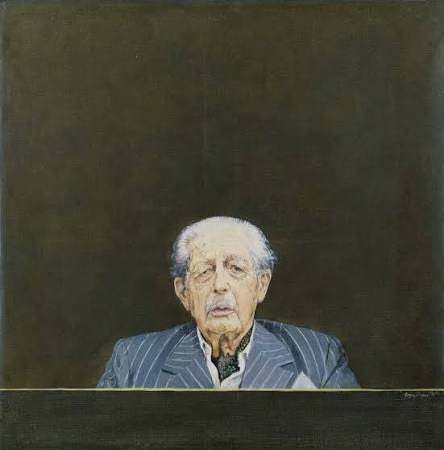
(This is an actual portrait of Macmillan, as unflattering as it is.)