
As “Big Rock Candy Mountain” begins to play, the title O Brother, Where Art Thou? appears on screen for the first time. The title was pulled from the film Sullivan’s Travels (1941) by legendary screwball comedy filmmaker Preston Sturges. Sullivan’s Travels tells the story of a legendary comic filmmaker who is tired of making silly movies and sets out to make a serious picture about the plight of the poor. “O Brother, Where Art Thou?” is the title of the film he sets out to make (yes the film within the film Sullivan’s Travels).
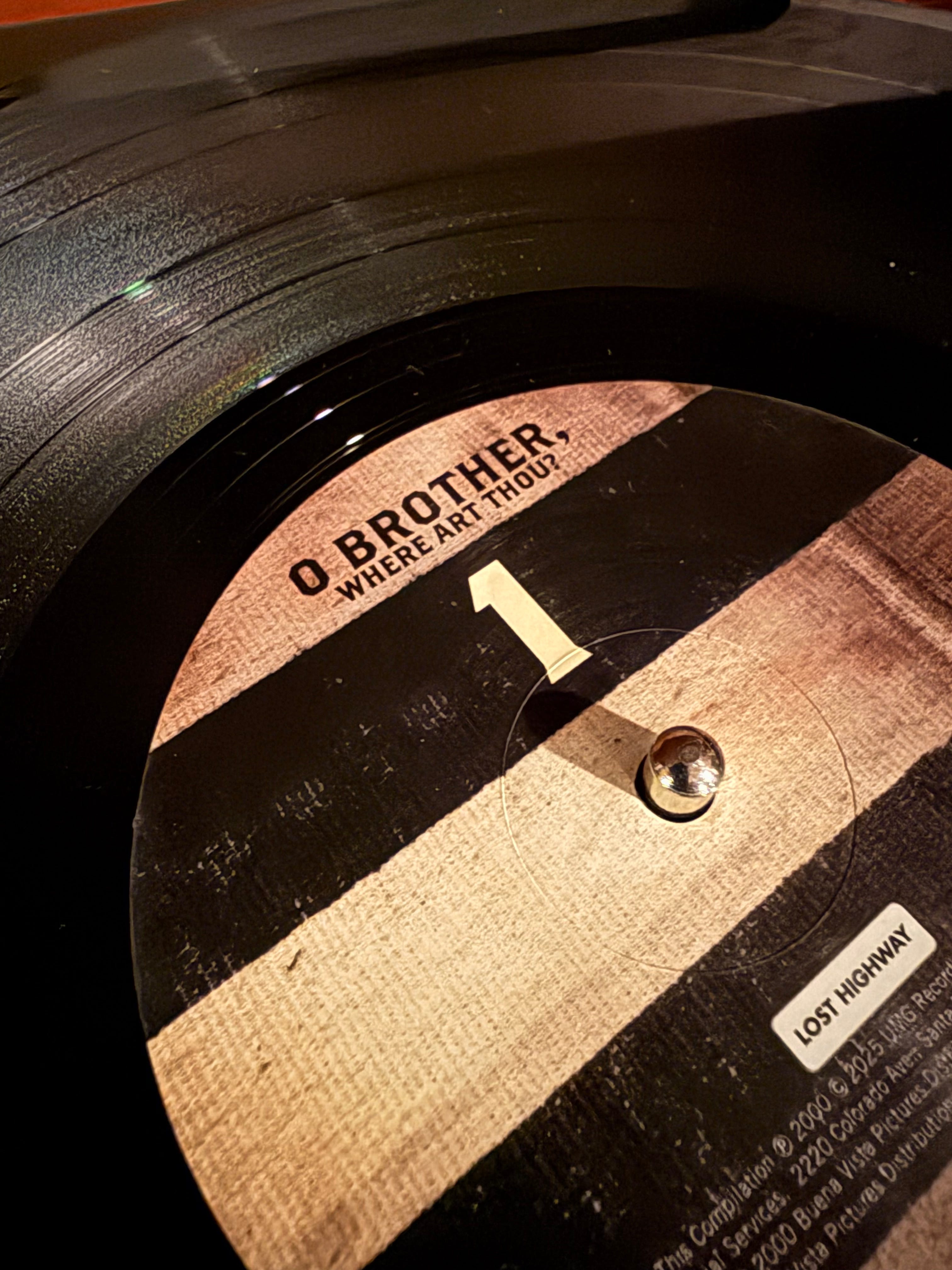
The Coen Brothers title, then, calls to mind Sullivan’s project from that film, to make a serious movie about the plight of the poor. “Po Lazarus” let us know this is going to be a story about the poor (in body and spirit), and “Big Rock Candy Mountain” builds on that theme. Have the Coens completed Sullivan’s project? Have they made a serious picture about the plight of the poor?
Well . . . No.
But . . . Yes.
That title panel is the first of several panels with simple lettering that appear before short snippets of action—silent film style—showing our still unnamed characters chained together in their prison stripes as they attempt to run from the chain gang. If “Po Lazarus” and the chain gang revealed the seriousness of purpose behind this movie, and if the title set us up to think we were watching a “serious film about the plight of the poor,” seeing our trio jumping up from the field—improbably unnoticed by the trio of sheriffs behind them—and gallumphing erratically and diving through the grass offers a punchline—this is going to be ridiculous. The song leans into the silliness and tells part of the story:
One Evening as the sun went down and the jungle fires were burning
Down the track came a hobo hiking and he said boys I’m not turning
I’m heading to a land that’s far away beyond that crystal fountain
So come with me we’ll go and see, the big rock candy mountain
These words foreshadow elements of the plot as Ulysses Everett McGill (George Clooney), has enlisted Delmar O’Donnel (Tim Blake Nelson), and Pete Hogwallop (John Turtorro) in a jail break with the promise of a hidden treasure. Like the hobo, Everett has promised a bright future over the horizon, one that sounds too good to be true. The remainder of the song details the joys of life at the Big Rock Candy Mountain, including cigarette trees, lemonade springs, a lake of stew (one of Whiskey too), where the hens lay soft-boiled eggs, and the “little streams of alcohol come trickling down the rocks,” the litany of glories to be found continues like that in each verse—a picture of paradise from the dreams of a “hobo.” Yet, the promise of the hobo (and, we will learn, of Everett) has some substance behind it. Odysseus was on an epic journey for home. “Big Rock Candy Mountain” captures the longing for a true home in heaven.
As the second verse begins, a title card appears with actors’ names. In the corners of the card are four small images, little line drawings—top left, a Cross (yes, a cross!); top right, a Key (What? like . . . Peter, but only one?); bottom right, the Star of David (Um, Old Testament anyone?!), and the bottom left, a layer cake (your guess is as good as mine!). Should we draw any conclusions about those images? Probably not, just small details randomly pulled from the movie to come.
The trio continues to lurch, inexplicably unnoticed, across the field. Our escapees have made their way toward a farmhouse where they can grab some supplies, including a live chicken. As they escape with it, Everett holds the bird upside down (an inverted chicken is a calm chicken). Its wings splay out to each side, making the silhouette of a bird in descent.
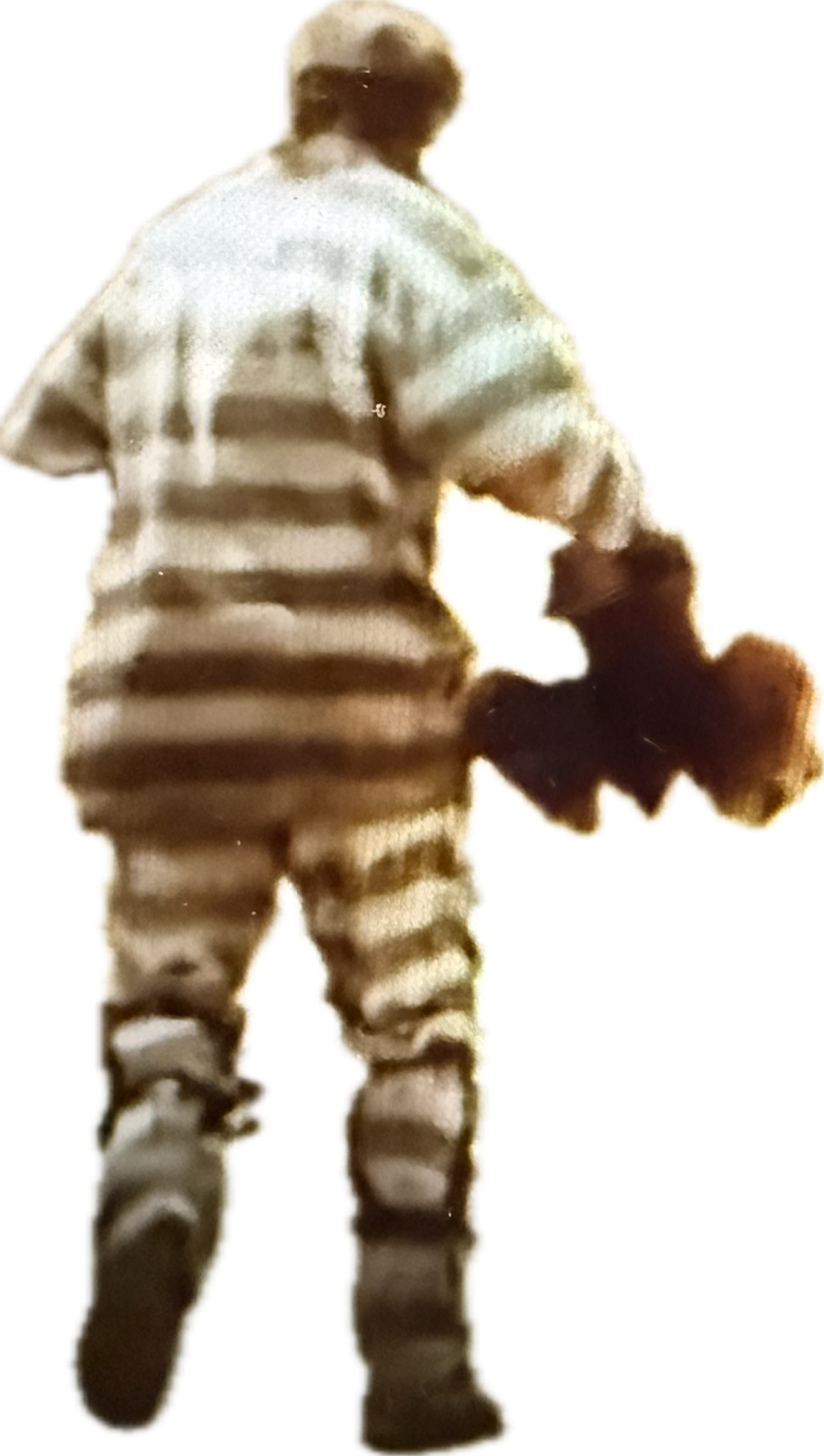
Can I be faulted for noticing that that bird resembles depictions of the Holy Spirit?

Are these travelers accompanied by God—the Holy Spirit—on their journey (like Odysseus was assisted by the Athena)? Maybe, although they do subsequently eat that chicken in the woods. We hear the last verse as they make a final chaotic dash for a passing train.
In the big rock candy mountain the jails are made of tin.
You can walk right out of them as soon as you are in.
There’s aint no short handled shovels no axes saws or picks.
I’m going to stay where the sleep all day
where they hung the jerk that invented work
In the big rock candy mountain
This final verse returns to the dream of a prisoner, longing for a place with jails that are just a home–a place where you can come and go as you please. The last plea is a bit jarring, however, seeking where they “hung the jerk that invented work.” Who invented work? Adam did. In The Fall. God punishes Adam with the need to work, “with labour and toil shalt thou eat thereof all the days of thy life.” (Genesis 3:17). Due to disobedience, man must work . . . for his entire life. But what could it even mean to “hang” Adam? That seems impossible and nonsensical—until we realize we’ve done it. We placed Christ—the “New Adam” upon the cross. So making it to the Big Rock Candy Mountain, getting to paradise, getting right with God, might mean returning to the place where they tried to kill him, to Calvary. And in order to make sure we haven’t missed the reference, the song ends with a line drawing attention to the story from Genesis:
I’ll see you all this comin’ Fall in the big rock candy mountain.
Hold on, you may say. First, “Po Lazarus” meant that the movie is about law, the possibility of salvation, and reconciliation with God, and now we are supposed to see this silly song announcing that the film is about a quest for heaven, and even a return to Christ? Am I saying the Coen Brothers are “secret Catholics” again [I did think we were done with that. Ed.]? Could I be seeing things that aren’t really there, or at least, weren’t really intended by the filmmakers? Of course I could.
But to quote Vizzini from The Princess Bride: “Wait ‘till I get going!”
Our trio are now free to embark on their adventure. They chase a train and Everett climbs aboard, hoping to find a “Smithy or someone otherwise skilled in the metallurgic arts.”
Next Up. “You Are My Sunshine”.
The Holy Spirit likened to a chicken instead of a dove!
I give a shout-out to this great series in a new post I've put up on early Dylan songs: https://dissidentcon.substack.com/p/standout-songs-from-dylans-early